
Protecting Claremont's Deep-Rooted Urban Canopy Through Skilled Tree Work
Heritage Canopy Demands on Claremont Properties
Few communities in the San Gabriel Valley carry the tree density that defines Claremont's residential corridors. Properties here sit beneath towering oaks, elms, and pines that were planted generations ago and have reached sizes that dominate lot lines, shade entire rooftops, and drop substantial seasonal debris loads onto driveways, patios, and walkways throughout the year. The city maintains over twenty-four thousand public trees along its streets and in its parks, and private property canopies add significantly to that already impressive total across every neighborhood. Maintaining these canopies at their current scale requires consistent structural pruning that removes deadwood, reduces end-weight on extended lateral limbs, and preserves the form that makes each tree an asset rather than a liability to the property beneath it. When this work is deferred even a few seasons, interior branching becomes congested and creates failure points that shed large limbs during Santa Ana wind events or routine winter storms. The root systems beneath these mature specimens are equally expansive, and their interaction with aging hardscape creates ongoing conflicts that require informed decision-making rather than reactive cutting that may cause more damage than it prevents. Every property in this environment carries a different combination of species, exposure, and structural proximity that shapes what responsible tree care actually looks like on a practical, individual lot basis.
Balancing Tree Preservation with Property Safety in Claremont
The commitment to tree preservation across Claremont creates a regulatory and cultural environment that property owners must navigate carefully when planning any work that affects established canopies on their lots. Tree policies and guidelines shape how private property trees are managed when their canopies interact with infrastructure, public rights-of-way, and neighboring parcels, and failing to follow proper protocols creates complications that extend well beyond the immediate project timeline. Drought stress has added another urgent layer to canopy management throughout the area in recent years. Extended dry periods weaken root systems, reduce a tree's ability to wall off decay after pruning wounds, and create conditions where bark beetle and borer populations establish rapidly in previously healthy specimens. Properties that rely on visual assessment alone often miss early indicators of decline that are only detectable through cambium sampling, resistograph testing at the trunk base, or aerial inspection of the upper crown. Building a care program that sequences seasonal pruning, targeted pest intervention, and honest risk evaluation allows property owners to retain the canopy cover that defines their landscape while managing the real structural and biological threats that come with mature tree stewardship in this region. Reacting only after visible failure occurs always costs more and frequently results in losing trees that could have been preserved with earlier, less invasive professional intervention.
Species-Specific Pruning for Claremont's Oldest Trees
Mature oaks, towering Canary Island pines, and spreading Chinese elms each require fundamentally different pruning approaches, and applying a generic trimming protocol across species produces results that range from ineffective to actively damaging on properties that depend on these trees for shade and value. Coast live oaks store energy differently than deciduous species and respond poorly to heavy crown reduction during summer months when they are actively photosynthesizing and most vulnerable to pathogen entry through fresh wounds. Pines concentrate their growth at terminal buds and do not regenerate well from heading cuts, meaning every pruning decision is essentially permanent in ways that broadleaf trees can eventually recover from over subsequent growing seasons with proper follow-up care. Elms develop aggressive epicormic sprouting after improper cuts, creating weak attachment points that become future failure hazards within just a few years of the original work. Effective pruning on Claremont properties starts with species identification and proceeds through an assessment of structural defects, prior pruning history, and the specific clearance or risk-reduction goals the property owner needs to achieve for their particular situation. Crown thinning percentages, cut placement relative to branch collars, and seasonal timing all vary by species and must be calibrated to deliver results that hold up for multiple growing seasons rather than requiring repeated corrective work that compounds cost and ongoing stress on the tree.
Pest and Drought Recovery for Stressed Claremont Canopies
Drought-stressed trees in Claremont are simultaneously fighting reduced water availability, depleted soil nutrient reserves, and accelerating pest pressure from invasive borers that target weakened cambium tissue beneath the bark surface. The polyphagous shot hole borer has been particularly aggressive in communities with dense sycamore and maple plantings, boring into the sapwood and introducing a fungal pathogen that blocks vascular transport and progressively starves the canopy of the water and nutrients it needs to survive. Trees under drought stress lack the sap pressure needed to flush out boring insects the way a fully hydrated specimen can, creating a compounding decline cycle that accelerates rapidly without professional intervention. Recovery programs begin with accurate diagnosis to distinguish drought stress symptoms from pest damage and fungal infection because the treatment protocols differ significantly and applying the wrong one wastes critical time the tree may not have available before decline becomes irreversible. Deep root fertilization restores soil biology and delivers nutrients directly to the active root zone where absorption actually occurs. Targeted trunk injections address specific pest populations without broad-spectrum applications that disrupt beneficial organisms in the surrounding soil ecosystem. Adjusting irrigation schedules to deliver deep, infrequent watering rather than shallow frequent cycles retrains root growth patterns toward depth and builds long-term resilience against future dry periods throughout the property's entire landscape.
Safe Large-Scale Removals on Tight Claremont Lots
Removing a full-sized tree from a Claremont property often means working within feet of structures, fences, and neighboring canopies that cannot tolerate any impact from falling sections. Properties with mature specimens frequently present access constraints that rule out conventional felling entirely, requiring sectional dismantling from the canopy downward using rigging systems that lower each piece to the ground in carefully controlled segments. Crane-assisted removals become necessary when tree size exceeds what climbing and rigging alone can manage safely, and mobilizing crane equipment requires advance planning for access routes, outrigger positioning, and overhead clearance verification at the work site. The permitting landscape adds another dimension to removal planning on properties where trees meet significance thresholds. Documented justification for removal and replacement planting obligations must be addressed as part of the overall project scope before work begins. Coordinating arborist reports, city applications, and replacement species selection into a single workflow prevents the delays and compliance gaps that occur when these elements are handled separately by different parties. After the trunk is sectioned and removed, stump grinding below grade completes the site restoration and prepares the ground for whatever the property owner needs next, whether that means replanting to satisfy permit conditions or converting the space to hardscape or other landscape use.
Comprehensive Tree Care Services in La Verne
Tailored to Your Needs
Our team provides a full range of professional tree care services designed for the unique conditions of the San Gabriel Valley. From routine trimming and emergency storm response to fire mitigation pruning and certified arborist consultations, we have the equipment and expertise to handle every aspect of your property tree needs.
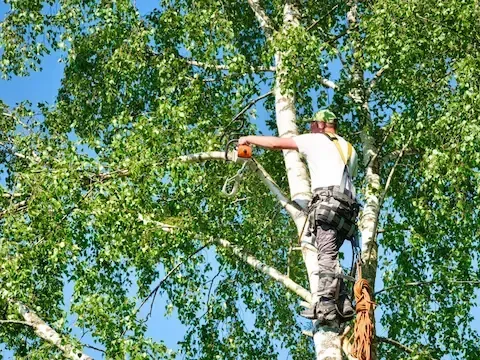
Professional pruning and crown care for every tree species on your La Verne property.
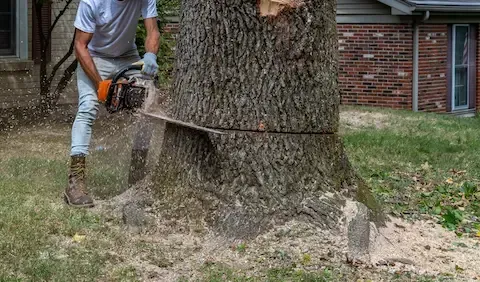
Safe, permitted tree removal for residential and commercial properties throughout La Verne.
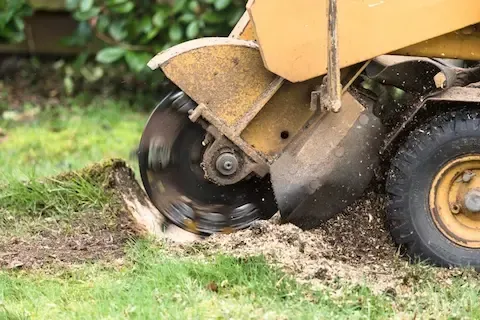
Fast, clean stump grinding that restores full use of your property space.
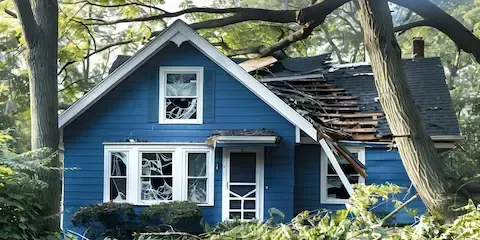
Rapid emergency response for storm damage and fallen trees across La Verne.
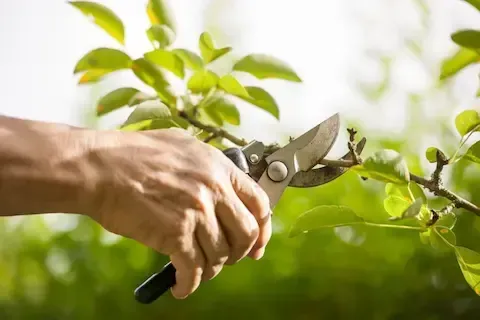
Certified arborist guidance for tree health, permits, and property planning.
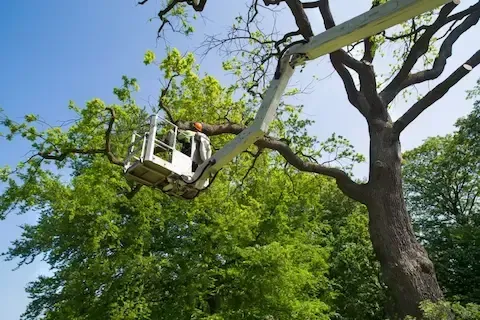
Wildfire risk reduction through professional defensible space pruning and vegetation management.

Comprehensive health programs to protect and restore your landscape trees.
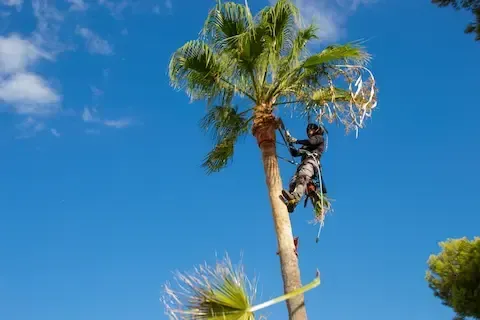
Specialized palm care including frond removal, skinning, and fire safety trimming.

Expert species selection and planting for long-term success in the San Gabriel Valley climate.
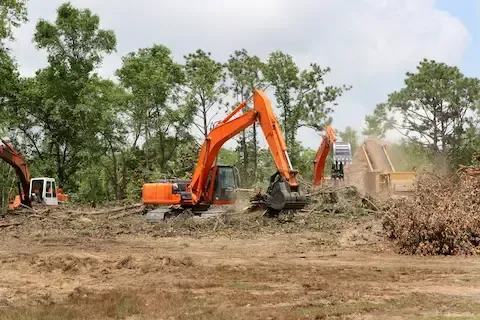
Complete lot clearing and brush removal for construction, development, and fire safety projects.
Frequently Asked Questions
Tree Care can be complex, and we’re here to provide answers to common questions. Here are some frequently asked questions from our clients.
Frequently Asked Questions about Tree Service Company
How much does tree trimming cost in La Verne?
Tree trimming costs in La Verne typically range from $250 to $1,500 depending on the size of the tree, number of branches involved, and accessibility of the work area. Foothill properties with steep terrain or trees near power lines may require specialized equipment that affects pricing. We provide free on-site estimates so you know exactly what to expect before any work begins.
Do I need a permit to remove a tree in La Verne?
La Verne enforces a heritage tree ordinance under Municipal Code Chapter 18.78 that requires permits for removing any tree with an 8-inch or greater caliper, as well as designated heritage trees. A certified arborist report is typically required as part of the permit application. Our team handles the full permit process so you stay compliant with city regulations.
What trees are protected under La Verne ordinances?
La Verne protects heritage trees and significant trees measuring 8 inches or more in trunk diameter at breast height. California oaks receive additional protection under Los Angeles County oak tree ordinances. Before removing or heavily pruning any mature tree on your property, it is important to confirm its protected status to avoid city fines and required replacement plantings.
How often should I have my trees trimmed in Southern California?
Most trees in the San Gabriel Valley benefit from professional trimming every 2 to 3 years, though fast-growing species like eucalyptus or Mexican fan palms may need annual attention. Properties in Very High Fire Hazard Severity Zones should maintain defensible space clearances year-round, which often means more frequent pruning schedules aligned with fire season preparation.
Is your tree service licensed and insured in California?
Yes. We carry full general liability insurance and workers compensation coverage for every crew member. California requires a C-61/D-49 Tree Service contractor license for commercial tree work, and our team meets all state licensing requirements. We are happy to provide proof of insurance and licensing before starting any project on your property.
What should I do if a tree falls on my property during a storm?
Contact us immediately for emergency tree service. Avoid approaching the fallen tree, especially if it is near power lines or structural damage. Our emergency crews respond to storm damage calls throughout the La Verne area and can safely remove fallen trees, stabilize damaged limbs, and help document the damage for your homeowners insurance claim.
Need Tree Care?
What Our Satisfied Clients Have to Say About La Verne Premier Tree Care
We pride ourselves on delivering great results and experiences for each client. Hear directly from home and business owners who’ve trusted us with their Tree Care needs.

They handled our heritage oak trimming with real care and knew exactly what permits we needed from the city. Professional crew from start to cleanup.
La Verne Homeowner
Called them for emergency service after a Santa Ana wind event brought down a large branch on our fence. Fast response and fair pricing on a stressful day.
Glendora Property Owner
Their arborist gave us an honest assessment of our trees and recommended treatments that actually worked. You can tell they know the local conditions here.
Claremont Resident
The Trusted Tree Care Expert Near You
Ready to hear more about expert services at La Verne Premier Tree Care?
Contact us today to receive a detailed, no-obligation quote.
Serving La Verne the surrounding cities
Mon-Fri, 8am-5pm

